Geometry Primer
Introduction
Geometry sits underneath everything I draw. Before there are knots, spirals, letters, or borders, there is a framework of lines, circles, and proportions that holds the page together. This kind of work doesn’t require advanced mathematics or specialist tools. A compass, a straightedge, and a bit of patience are enough to begin.
The aim of this primer is to introduce the basic constructions used across many craft traditions: how to draw a clean square, how to bisect a line or an angle, how to set out perpendiculars and parallels. These simple forms are the foundations of more complex geometric systems, and learning them will help you see the structure behind many manuscript pages — including my own work.
Everything here is slow, deliberate, and built by hand. Once you understand these basics, you’ll be able to draw simple geometric forms with confidence and begin to recognise the underlying order in the art that inspired you to pick up a compass in the first place.
What You Need
- Compass
- Straightedge
- Pencil
- Paper
- Patience and slow work
These tools are simple, but the way you use them matters. Each construction in this primer relies on clarity, steadiness, and letting the compass do the thinking.
How to Work
Slow, deliberate, no measuring, let the compass do the thinking. Ruler‑and‑compass geometry is not about measuring. It is about constructing. Every line, angle, and point is created from relationships, not numbers.
- Work slowly and deliberately
- Keep your compass radius steady
- Let arcs cross cleanly
- Avoid rushing or forcing the tool
- Trust the process — accuracy comes from method, not speed
Basic Constructions
These are the universal constructions used across many craft traditions. Each one is simple, repeatable, and forms the foundation for more complex geometric systems.
Circles
The circle is the foundation of ruler‑and‑compass geometry. Every construction begins with a steady radius and a clean arc. The compass does the thinking for you: once the radius is set, every point on the circle is the same distance from the centre. This simple idea underpins all the constructions that follow.
Work slowly. Let the compass settle before you begin the arc, and keep the pressure light and even. A clean circle is not about speed but about steadiness.

Lines and Segments
A straightedge gives you a clean line, but the geometry comes from how that line relates to circles and arcs. In this primer, a “ruler” is simply an unmarked straight edge. You do not measure lengths—you construct them.
A line segment is the simplest geometric object, yet it becomes powerful when combined with arcs. Many constructions begin by establishing a segment and then using its endpoints as centres for circles.
Drawing Perpendicular Lines
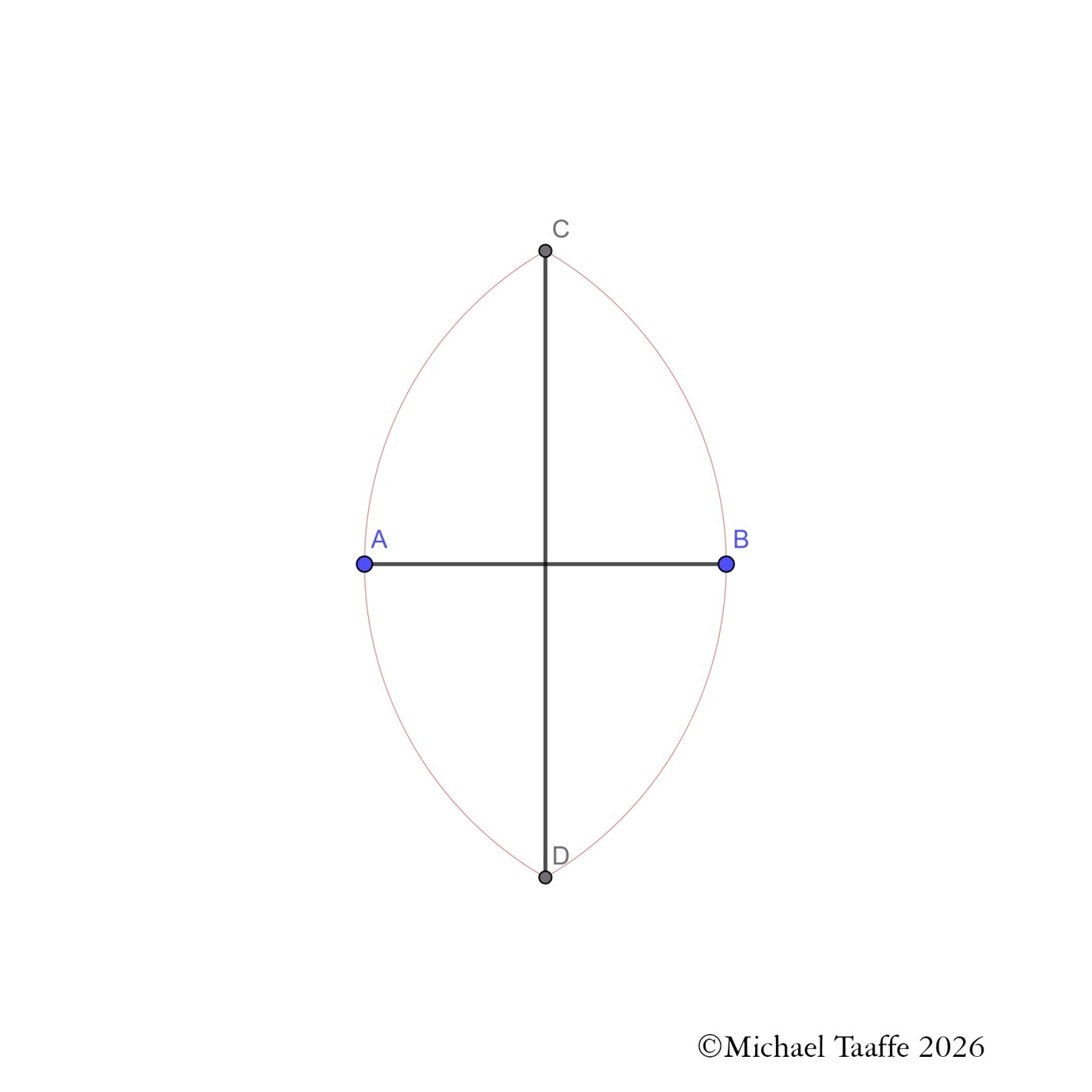
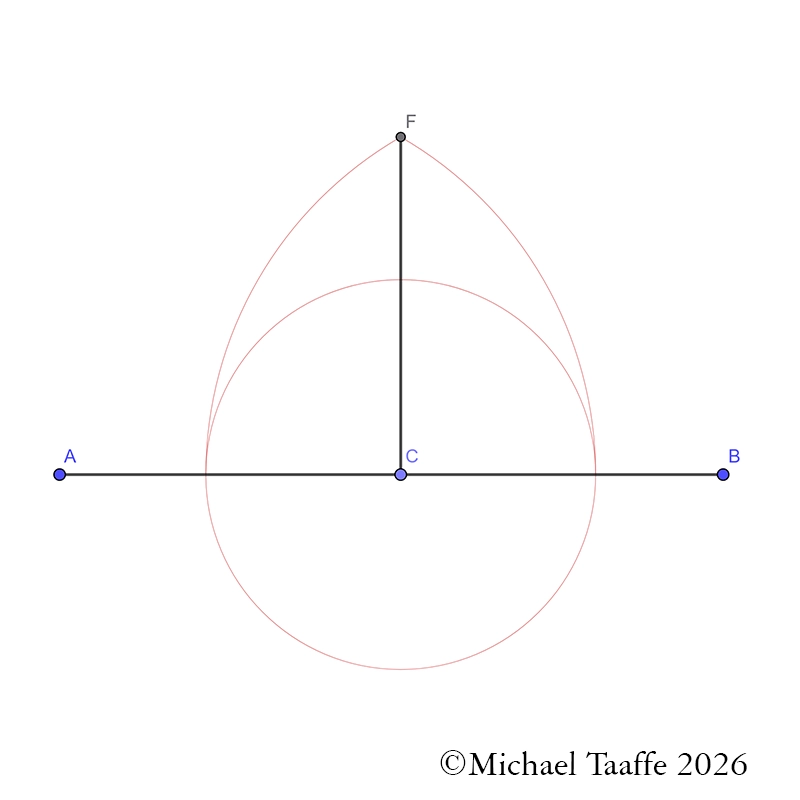
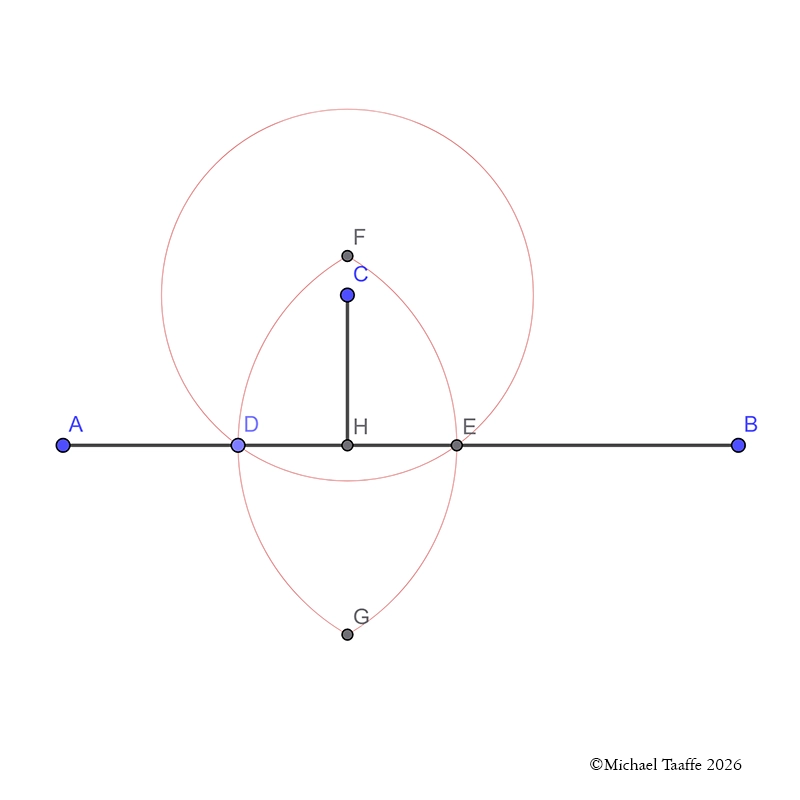
Perpendiculars create right angles, grids, squares, and alignment systems. They are constructed, not measured. Each method relies on equal arcs crossing cleanly, revealing the right angle through the relationships between points.
Bisecting Lines and Angles
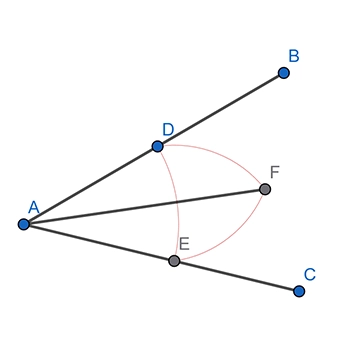
Bisection divides a line or angle into two equal parts using only arcs. It is one of the most satisfying constructions because the result emerges naturally from the geometry—no measuring, no guessing, just clean relationships.
Squares
A square is built from right angles and equal lengths. The construction begins with a single segment, then uses perpendiculars and arcs to establish the remaining corners. The result is a clean, reliable framework that appears throughout geometric craft.
Squares form the basis of grids, borders, and many manuscript layouts. Even though this primer avoids manuscript‑specific geometry, learning to construct a square is an essential step toward understanding the structure behind more complex designs.
Parallels
Parallel lines create rhythm, spacing, and structure. They are constructed by transferring a distance using arcs, ensuring that the new line remains the same distance from the original at every point.
This method avoids measurement entirely. The compass carries the spacing, and the straightedge simply connects the resulting points.
Why These Basics Matter
These constructions , and structure in many craft traditions. These simple constructions underpin the proportion and alignment, and form the underlying structure, of many historical craft traditions. Once you understand them, you begin to see the invisible geometry behind manuscript pages, decorative borders, and the work I create today.
Closing Note
These constructions are simple, but they open the door to a deeper understanding of geometric craft. With practice, the shapes become familiar, and the structure behind the art becomes clearer.
You must be logged in to post a comment.